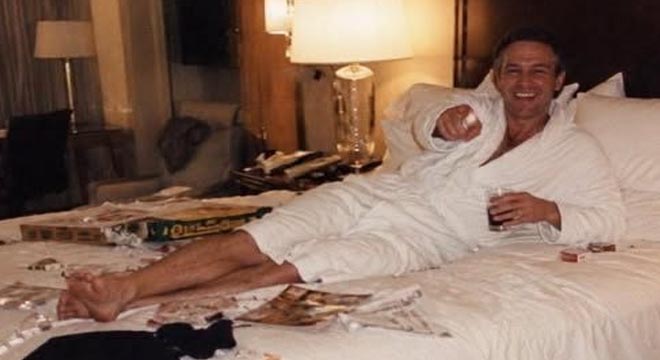
I worked as a hotel cleaner in one of the city’s most expensive hotels, the kind with marble floors, crystal chandeliers, and guests who treated staff like invisible furniture. Most days were the same: I’d knock, wait for no answer, and step into rooms that looked like parties had exploded overnight. Empty bottles, broken glasses, sheets tangled like storms had passed through. And every morning, I cleaned one particular room that belonged to a wealthy regular guest who always stayed in the presidential suite.
He never left tips. Never said thank you. He would just lie on the bed in a robe, sipping cocktails like the world existed for his amusement while I worked around him for four or five hours straight. Worse, he always talked. He flirted in that careless, insulting way some men think is charming, as if I should feel lucky to be noticed. I never responded. I didn’t care about him, didn’t want anything from him, and certainly didn’t see him as anything beyond a difficult part of my job.
But one morning, after I refused him more firmly than usual, his mood changed. The teasing turned sharp. The jokes became insults. He mocked my job, my clothes, even the way I cleaned. I told him calmly to stop, and when he didn’t, I pushed past him to leave the room and report his behavior. That was the moment everything escalated.
The next day, I was called into management. I expected a warning about “guest satisfaction” or some empty corporate speech, but instead I was told I was being terminated. The guest had complained that I was rude, aggressive, and, most shocking of all, that I had stolen his luxury watch. I remember laughing at first, thinking it had to be a misunderstanding. But the manager didn’t laugh. Security had already been informed. My locker was searched. My bag was checked. Nothing was found, but it didn’t matter. The guest’s word carried more weight than mine.
I left the hotel that afternoon holding a box with my uniform inside, humiliated and shaking with anger. What hurt most wasn’t losing the job—it was the ease with which he had destroyed my name without consequence. That night, I sat in my small apartment replaying every moment in my head until something in me stopped feeling afraid and started feeling focused instead. I wasn’t going to beg for my job back. I was going to make sure the truth came out in a way no one could ignore.
I knew his routine better than anyone. I knew when he arrived, how long he stayed, what rooms he booked, and who he invited. I also knew something else: he wasn’t as careful as he thought he was. Over the weeks, I had noticed things while cleaning—receipts left behind, confidential documents on his laptop, and conversations he had loudly on speaker phone, assuming no one important was listening. He treated the entire hotel like a private playground.
So I waited.
A week later, I contacted someone I used to work with in housekeeping who still owed me a favor, and together we made a copy of something the guest had left behind during one of his late-night parties: a folder of financial documents he clearly didn’t realize had been photographed before he threw it in the trash. They weren’t illegal in themselves, but they pointed toward something far more serious—business dealings that didn’t match his public image. I also had something else: footage from a hallway camera that showed him stumbling out of his room the night before he accused me, clearly too drunk to remember where he had left anything.
I didn’t go to the hotel directly. Instead, I made sure the right people received everything at once: hotel ownership, the corporate security department, and a journalist I knew covered luxury industry scandals. I didn’t accuse him of anything dramatic. I simply sent what I had and let questions form naturally.
The reaction was faster than I expected.
Within days, the hotel launched an internal investigation. The guest’s access was quietly suspended while they reviewed his behavior across multiple stays. It turned out I wasn’t the first staff member he had mistreated, only the first one he had managed to get fired. The watch he claimed I stole? It was found later in a minibar drawer he had overlooked during one of his parties, exactly where the cleaning logs proved I hadn’t been in the room when it went missing.
When the truth surfaced, the hotel didn’t announce it publicly, but I heard about it anyway. He was removed from their VIP list. His company accounts were reviewed. And quietly, his influence at the hotel disappeared overnight.
A few weeks later, I received a letter. Not from him, but from the hotel’s general manager, offering reinstatement along with an apology and compensation. I didn’t go back. I didn’t need to. I had already learned what I needed to know: people like him rely on silence and fear, and the moment you break that silence, everything shifts.
I didn’t celebrate. I just moved on. But every now and then, I think about that hotel room, the arrogance, the accusation, and the moment everything changed. And I smile—not because I wanted revenge, but because I proved something simple that he never understood.
People who treat others like they don’t exist eventually discover what it feels like when they’re the ones no one believes.