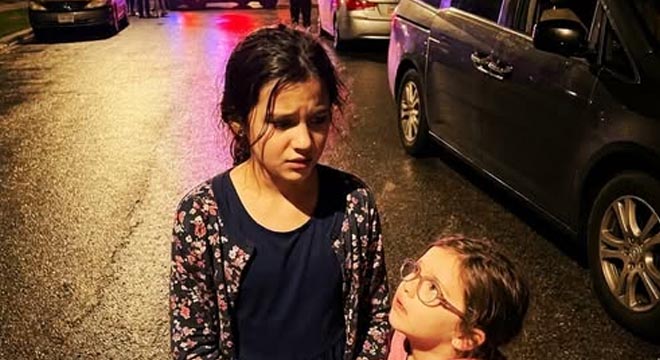
Zoe Brennan woke to the blue-white glare of her phone and a message from her father that made the darkness feel suddenly unsafe. Grab your sister and run. Don’t trust your mother. The words sat on the screen like a warning flare, impossible to explain and too specific to ignore. Her father, Kevin, was supposed to be in Seattle on a consulting trip, the kind he took every month with predictable calls, careful updates, and no drama after ten o’clock. Downstairs, her mother was still awake in the living room, watching a crime documentary with a glass of wine, ordinary enough to make the warning feel unreal. But Kevin Brennan was not a careless man. At seventeen, Zoe knew one thing with terrible clarity: if her father had used those words, something had already gone wrong.
She moved before fear could slow her down. Zoe woke twelve-year-old Becca with one hand over her mouth, whispered that Dad had sent an emergency message, and helped her dress over her pajamas while the house stayed silent beneath them. They escaped through Becca’s bedroom window, dropped into the cold backyard, climbed the fence, and ran through dark suburban lawns that suddenly looked foreign under the streetlights. Zoe tried calling her father, but his phone went straight to voicemail. Then their mother began texting, first worried, then angry, then threatening to call the police if they did not come home. When Zoe answered and mentioned Kevin’s warning, her mother laughed in a brittle, wrong way and claimed he was having a mental break. Minutes later, Zoe saw her mother’s silver SUV crawling through the neighborhood with its headlights off, searching for them like a problem to be contained.
At a strip mall pay phone, Zoe called the number from a message sent by Special Agent Victoria Reeves of the FBI. The truth arrived in pieces too large for a teenage mind to hold at once: Kevin had been cooperating with a federal investigation into a real estate money-laundering scheme, and Zoe’s mother was not a minor player but central to the operation. For three months, he had gathered evidence while pretending life at home was normal, because confronting someone connected to dangerous associates could have put the whole
family at risk. That night, agents lost contact with him in Seattle, and his final communication before his phone went dark was the text telling Zoe to run. Reeves instructed the girls to reach a field office without using cards or phones, but their mother found the taxi first. The silver SUV slammed into them on a rural road, forcing them into a ditch and turning every comforting memory of home into something Zoe no longer knew how to trust.
The FBI found them before their mother did. Agent Reeves wrapped the girls in emergency blankets and told them Kevin was alive, injured but in protective custody after escaping an attack at his hotel. Their mother fled and was later arrested near the Canadian border with false documents and cash. The case that followed unfolded in court through bank records, shell companies, inflated property transactions, wire transfers, surveillance reports, and federal testimony. Prosecutors laid out a five-year operation that had moved millions through real estate deals while hiding behind suburban respectability. Kevin testified for two days, describing how he discovered the first suspicious file during a tax review and chose federal disclosure over marital denial. Their mother received a long sentence, not only for the financial crimes, but for the violence of the night she tried to stop her daughters from reaching safety.
Afterward, Zoe, Becca, and Kevin rebuilt their lives in another state, with enough protection to sleep without listening for engines in the driveway. Becca still checked her bedroom window every night, and Zoe went to college to study law, drawn toward the space between harm and accountability. Kevin blamed himself for not seeing the truth sooner, but Zoe understood something therapy helped her name: you cannot protect people from what you do not know exists, and courage sometimes begins the moment pretending becomes more dangerous than the truth. She often thought about what might have happened if she had ignored that message, if she had gone back to sleep and waited until morning. Twelve words had divided her life into before and after. They had not explained everything, but they had saved what mattered most: two sisters who trusted the right warning, and a father who loved them enough to send it before the darkness reached home.