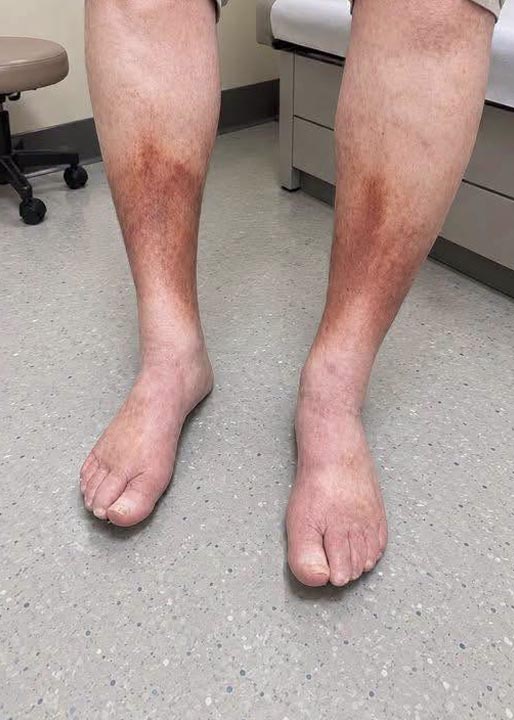
Swollen ankles are a common condition that many people experience at some point in their lives. After a long day of standing, a lengthy flight, or an intense workout, mild swelling in the feet and ankles may seem completely normal. In many cases, it disappears after a good night’s sleep or a period of rest.
However, doctors warn that persistent or unexplained ankle swelling can sometimes be more than a temporary inconvenience. While occasional swelling is often harmless, recurring or worsening swelling may be your body’s way of signaling that something deeper is happening beneath the surface.
Understanding the possible causes can help you recognize when swelling is simply a response to daily activities—and when it may deserve closer attention.
Ankle swelling, medically known as peripheral edema, occurs when excess fluid becomes trapped in the tissues of the lower legs, feet, or ankles.
Gravity plays a major role in this process. Because the ankles are among the lowest points of the body when standing or sitting, fluid naturally tends to accumulate there.
Temporary swelling can occur after prolonged standing or sitting, in hot weather, during pregnancy, or after a minor injury.
In these situations, the swelling often improves after resting, elevating the legs, or moving around.
The concern arises when swelling becomes persistent, returns frequently, or appears without an obvious explanation.
The NHS advises seeking medical assessment when swelling persists or worsens. Unexplained swelling in one leg, sudden or severe swelling, and redness or heat warrant urgent advice. Swelling accompanied by breathlessness or chest pain can be an emergency; contact the local emergency service rather than waiting for an online explanation. The appropriate treatment depends on the underlying cause.
A photograph of an ankle cannot establish that cause. It cannot show when the change began, whether it affects one side or both, or what other symptoms a person has noticed. Two images that look similar may come from very different circumstances. This is why an alarming caption should not be treated as a diagnosis of the person pictured or of the reader looking at it.
For someone trying to explain the problem at an appointment, the sequence of events is part of the story. Describing when the swelling was first noticed and how it has changed is more informative than trying to fit the experience to a dramatic internet headline. A clinician can consider that description alongside an examination and the person’s history, rather than relying on the visual impression alone.