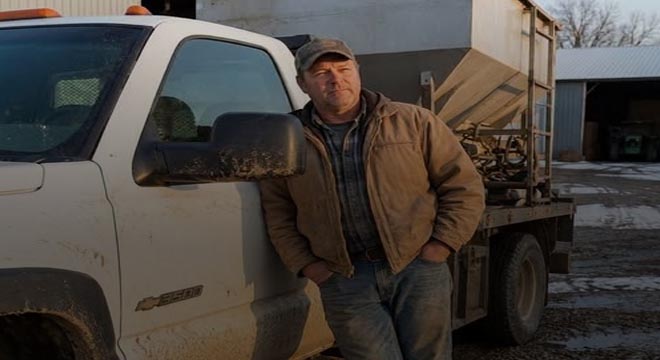
“To my son Wade, the 1994 International feed truck, with its mixer box and title.” The attorney stopped reading, and the ticking radiator seemed suddenly louder than everything else in the little office above the hardware store. Across the table, my older brother Phil sat motionless in his good sport coat, his reading glasses folded between his fingers. He had just inherited four hundred acres of Nebraska farmland, the family home, the irrigation system, and the machinery I’d spent twenty-two years operating and repairing. I had inherited a thirty-year-old feed truck. Outside, the February wind rattled the windows, and somewhere downstairs a machine whined as someone cut a key. My wife, Theresa, pressed her hand against my knee beneath the table, but I barely felt it. I kept staring at the attorney’s papers, waiting for the sentence that would explain why my father had left the land I’d devoted my adult life to tending to a brother who hadn’t driven a tractor in thirty years.
My name is Wade Kucera, and I was fifty-one that winter, living with Theresa on seven acres outside Elba, Nebraska. My father, Albert Kucera, had farmed near St. Paul all his life, and for twenty-two years I’d worked beside him through planting, irrigation, harvest, winter feeding, and calving. Phil, five years older, had moved to Omaha and built a successful career selling insurance. There had never been much doubt about which of us was the farmer. I knew the home quarter’s stubborn silt loam, the low spots in the east eighty, and every troublesome tower on the center pivot. I could tell when the irrigation well was struggling by the sound of its pump, and I knew which gate would stick after a hard frost. Dad was not an affectionate man, nor one who discussed his plans. He believed the day’s work ought to speak for itself, and most of our conversations took place over machinery that needed repairing or cattle that needed feeding. He died in early February, the night after driving the feed truck into the machine shed, and I found him the next morning when he failed to appear for chores. Three weeks later, Don Jensen, his longtime attorney, read the will and confirmed that Dad had signed it the previous November while fully aware of its provisions. Phil received the home place, the east eighty, the creek pasture, and the equipment. I received the International truck. Theresa urged me to seek independent legal advice, convinced that twenty-two years of labor deserved examination before I accepted the outcome. I couldn’t bear the thought of challenging my father’s final instructions when he was no longer alive to explain them. Whatever had motivated him, the signature was his. Phil told me outside the attorney’s office that he hadn’t asked for the farm and hadn’t known about the inheritance until Don contacted him. I believed him, but neither of us knew what to say next. That afternoon, I drove out to collect the truck. Its once-white paint had faded almost to chalk, and the mixer box carried dents from decades of feeding cattle. Inside the cab, Dad’s yellow leather chore gloves lay curled on the dashboard beside a seed-corn cap. The air smelled of diesel, ground feed, and the peppermints he carried to disguise his tobacco habit. I sat behind the wheel until the windshield fogged, then started the old 466 diesel and drove eleven miles home at forty-five miles an hour, leaving the gloves exactly where he’d placed them. Theresa met me in the yard and observed that at least the truck was paid for. I tried to laugh, unaware that those words would eventually explain my inheritance. The immediate problem was my herd of forty cows, which I’d built from six bred heifers Dad sold me at cost when I was twenty-nine. They’d always grazed his creek pasture and wintered on his cornstalks, an arrangement that had formed part of my compensation along with a modest wage. Now the land belonged to Phil. He told me I could leave the cattle where they were, but I couldn’t bring myself to depend on a brother who owned everything I’d helped maintain. I hauled the cows home during calving season, rented summer pasture from Mrs. Nielsen north of Elba for $65 per cow-calf pair per month, and accepted temporary work at the local cooperative for $23 an hour, delivering fertilizer and helping at the feed mill. The pasture would cost me approximately $13,000 over five months. Every morning at half past five, I climbed into Dad’s truck to feed my cattle, and every morning his gloves were waiting on the dashboard. As April approached, I watched the weather and soil temperatures the way I always had. Dad never planted the home quarter until the soil reached fifty degrees four inches down for three consecutive mornings. I knew every planter setting, but I refused to telephone Phil and offer to plant the crop. I had spent twenty-two springs working that ground and couldn’t bear asking to be hired back onto it. Theresa called it pride, and I knew she was partly right. Phil didn’t call either. By early May, the neighboring fields were planted, but our father’s ground remained covered in the previous year’s stalks. Then, on May 12, three days after two inches of rain, I passed the home place and saw an unfamiliar tractor pulling a sixteen-row planter through the wet soil, with a Kansas pickup parked nearby. Mud packed the gauge wheels, and the planter’s tires smeared the seedbed into shiny, compacted tracks. I nearly turned into the lane to stop them. Instead, I kept driving because Phil had hired strangers rather than ask his own brother. By June, the corn was emerging in ragged patches, the weeds were spreading, and the center pivot still stood where we’d parked it the previous autumn. The east eighty had been seeded at a population suitable for irrigated ground, although it depended entirely on rainfall. I knew what July heat would do to those crowded plants. Yet I continued hauling fertilizer for other farmers, passing the fields that had once been the center of my life without turning in.
The first person to tell Phil the truth about his crop was our neighbor Butch Sedlacek, a seventy-three-year-old farmer who had argued across the fence with Dad for forty-six years. On June 11, Butch found Phil standing beside the uneven corn and asked what the Kansas outfit had charged to plant it. Phil admitted he’d paid $28 an acre, plus seed, and that he didn’t know how to correct the problems. The crop had poor emergence because the wet seed trenches had hardened around developing roots. Waterhemp was spreading between rows, nitrogen was needed, and the center pivot had developed an electrical fault that a repairman couldn’t return to investigate for another two weeks. Butch told him the crop might still be worth saving if someone acted immediately. Then he reminded Phil that there was a man eleven miles away who knew that irrigation system better than anyone alive. Phil confessed that he didn’t know how to ask me for help after inheriting the entire farm. Butch suggested he drive to my place, take off his cap, and say what needed saying. That evening, I was greasing the feed truck when Dad’s blue pickup came down our gravel lane. For one painful instant, with the setting sun behind the windshield, I expected my father to step out. Instead, Phil climbed down in muddy new boots and approached me with his cap in his hands. He admitted he had made mistakes and asked whether I’d come look at the fields. It was the sentence I’d been waiting four months to hear, and when it finally came, I found I had no appetite for the angry speech I’d rehearsed. I told him I’d come Saturday after my shift at the cooperative. He offered to pay whatever I asked, but I said the chemical and fertilizer bills would be enough for the moment. I did ask why he’d hired someone from Kansas. Phil answered that he had been too ashamed to ask me, especially knowing everyone around St. Paul would understand why he needed help. His honesty startled me because it sounded so much like the explanation I’d given Theresa for refusing to offer it. On Saturday, before leaving for the farm, I went looking for Dad’s little green notebook. He kept records of seed populations, irrigation settings, well performance, and equipment faults, and I knew it would help me diagnose the pivot. The notebook wasn’t in the shop, where I’d already searched months earlier. I finally thought of the feed truck and reached beneath the passenger side of its bench seat, a place I’d avoided because it had always been Dad’s side of the cab. Behind a log chain, jumper cables, and a coffee can of cotter pins, I found a zippered bank bag containing the notebook and a sealed envelope addressed to me in his careful block printing. The letter inside was dated November 9, four days before he’d visited Don Jensen to prepare the will. I sat on the truck’s running board and began reading. Dad explained that the farm carried $388,000 in debt, accumulated after he financed the irrigation pivot in 2012, borrowed during my mother’s illness, and took on additional loans following the flooding in 2019. The annual debt service was approximately $38,000, more than the farm had generated in clear earnings for six years. He admitted he’d been borrowing again to meet earlier obligations and had concealed the situation because he was ashamed. Then he explained why he’d left the land to Phil. Dad believed that if I inherited it, I would spend the rest of my life struggling to preserve every acre, refusing to sell even when doing so meant sacrificing my own security and Theresa’s comfort. Phil, who understood finances and wasn’t bound to the land in the same way, would be willing to sell it, repay the bank, and divide the remaining proceeds fairly between us. Dad trusted him to do that. He wrote that I’d received the feed truck because it was paid for and was the only equipment on the place that truly belonged to him without a lender’s claim. At the end of the letter, he told me I’d been the best help a man could ever have and apologized for never saying so when the words might have meant something. I read those lines twice before my eyes blurred. For twenty-two years, I’d waited to hear my father acknowledge what we’d built together. He’d managed to write it down, buy a stamp, and address the envelope, but he hadn’t been able to put it in the mail. Theresa found me sitting on the running board and read the letter beside me. She understood at once why he’d made his decision, but she also understood the hurt his silence had caused. I drove the feed truck to the home place with the letter on the dashboard beside his gloves, found Phil standing outside the shop, and invited him into the cab. He read Dad’s words without speaking, then reached into his shirt pocket and unfolded a paper he’d been carrying since March. It was his own estimate of the farm’s possible sale value, less the bank debt, with the remainder divided equally between Phil and Wade. He had always intended to share the proceeds, but he’d wanted to raise one crop himself before selling because Dad had once told him, at nineteen, that he wasn’t cut out to be a farmer. Phil had spent decades trying to prove that judgment wrong, and his decision to hire strangers had been part of that effort. The two of us sat with our father’s letter and Phil’s calculations between us, recognizing how completely we’d misunderstood both the will and each other. Then Phil looked toward the fields and asked me to show him what could still be saved. I took Dad’s green notebook from the seat, climbed down beside him, and for the first time since the funeral, we walked toward the corn as brothers rather than as strangers divided by an inheritance.
We spent two hours examining the pivot quarter, digging up plants to inspect their root systems and measuring the gaps where seed had failed to emerge. I showed Phil the compacted seed trenches, the yellowing leaves that indicated nutrient stress, and the young waterhemp that needed prompt control. The field wasn’t beyond help, although no amount of corrective work would recover the entire yield we’d lost through late planting and poor emergence. Then I opened Dad’s notebook to an entry from 2017 describing the exact irrigation-panel fault Phil had encountered. It identified a safety switch on the fifth tower and noted how Dad had cleared the problem. We inspected the system, cleaned the corroded switch, inflated the flat tire, and checked that the safety circuit was functioning before restarting the pivot. When Phil moved the controls, the long machine shuddered, its towers began to roll, and the sprinklers sent water across the struggling corn. He stood watching it for a long time. Back at the yard, we sat on the tailgate of Dad’s pickup, the place where farm decisions had been made for as long as I could remember. Phil admitted that, despite everything, he no longer wanted to sell the entire place. The months he’d spent walking the fields had made him understand what the land meant to our family, even if he wasn’t equipped to operate it alone. I told him we couldn’t responsibly retain all four hundred acres while carrying $388,000 in debt and annual payments that the farm couldn’t support. Then he mentioned that Butch had twice asked Dad to sell him the east eighty, which lay directly against Butch’s property. We estimated that the tract might bring approximately $5,000 an acre because of its location and value to the neighboring operation. Eighty acres at that price would produce $400,000 in gross sale proceeds, potentially enough to retire the farm debt, subject to transaction costs and the lender’s payoff requirements. Phil wrote the figures on the back of Dad’s envelope, subtracting $388,000 from $400,000 and looking at the remaining balance. It wasn’t a fortune, but selling the east eighty could leave the home quarter, pivot land, and creek pasture substantially unencumbered. Dad had refused to sell that field because his own father purchased it in 1961 with money earned from hogs, but we agreed that preserving the heart of the farm might be a better way to honor the family than losing everything to the bank. Phil proposed placing the retained acreage in both our names once the sale and estate administration were properly documented, with each of us holding an equal interest. I would operate the farm, manage the crop ground and cattle, and pay him an agreed share of the land’s rental value. Phil would reinvest his rental income in machinery and improvements until we had repaired the equipment Dad could no longer afford to maintain. I told him the arrangement seemed unusually generous for someone who lived in Omaha and earned his living selling insurance. He answered that he didn’t need the farm for income; he needed it to remain part of his life. Then he asked whether he could come out for a week each spring, drive a tractor, and learn how to plant properly. We shook hands on the tailgate, but unlike Dad, who believed a handshake settled everything, we also agreed to put the arrangement in writing. We visited Butch that evening, and he confirmed that $5,000 an acre was the price he’d considered fair for the east eighty. The land transfer, creditor payoff, and division of the remaining property required formal agreements and several months of work with the lender, attorney, and title office, but by Christmas the ownership arrangements had been completed. Meanwhile, we moved quickly to salvage the growing crop. The cooperative applied a suitable herbicide, we supplied additional nitrogen beside the rows, and the pivot ran through the dry weeks of July. The damaged stand responded, although the uneven emergence and early root stress remained visible until harvest. In October, the pivot quarter averaged 171 bushels per acre, well below the 215 bushels Dad typically expected from that ground. The east eighty, which Butch allowed us to harvest one final time before completing the transfer, produced 94 bushels per acre. Phil rode beside me in the combine for every round, watching the yield monitor and asking questions about moisture, grain weight, and the way the machine adjusted to different parts of the field. When we calculated the pivot quarter’s average, he noted that our mistakes had cost roughly forty-four bushels per acre compared with a good year under Dad’s management. He opened the green notebook and wrote the result in ink beneath the planting notes. It was the first crop record my brother had ever entered on that farm. By the following spring, the soil reached fifty degrees at four inches deep on three consecutive mornings in late April, and Phil came from Omaha with a week’s vacation arranged. I checked the planter, explained the settings, and stood on the tractor step beside him for his first pass, just as Dad had stood beside me when I was eleven. The sixteen rows ran straight toward the north fence. At the end of the field, Phil slowed the tractor and asked whether he’d done it correctly. I told him he had. He looked back at the clean rows, nodded, and remained quiet for a moment. I turned toward the pivot and gave him time to enjoy the work without feeling watched. At noon, Theresa brought sandwiches, coffee, and a whole pie, and the three of us ate on the pickup tailgate with meadowlarks calling from the fence posts. Butch drove by on the county road, sounded his horn twice, and continued toward town. For the first time since Dad died, the farm felt like a place where both of us belonged.
I still climb into the old International feed truck before daylight to mix and deliver feed to my cattle, even though Phil says we could afford something newer now. The engine takes a little longer to warm on bitter mornings, the heater still roars, and the mixer box carries the same dents it had when Dad last drove it. His yellow leather gloves remain curled on the dashboard, shaped by years of gripping a steering wheel, and the seed-corn cap rests beside them where Phil placed it after reading the letter. I haven’t moved either one. Sometimes I think about the months after the funeral, when I couldn’t understand why Dad had left me a machine worth only a fraction of the land I’d spent my adult life working. I remember Theresa urging me to contest the will, Phil standing uncertainly outside Don Jensen’s office, and the long drive home with the gloves riding in front of me. I also remember hauling my cattle away in the middle of calving season, taking a job at the co-op, and watching strangers plant the home quarter too wet because my pride wouldn’t let me turn into the lane. Phil was no less stubborn. He wanted to prove himself on the farm because Dad had told him decades earlier that he wasn’t suited for it, and he was willing to risk the crop rather than admit he needed help from his younger brother. We were both shaped by the same father, whose skill with land and machinery was greater than his ability to speak openly about affection, fear, or disappointment. The letter he left in the truck explained his intentions, but it didn’t make the months of silence harmless. If he’d told me about the debt while he was alive, perhaps we could have found a way to address it together. If Phil and I had spoken honestly after the will was read, we might have avoided an expensive spring and a disappointing harvest. Yet I can now see that Dad’s decision, however clumsily communicated, came from knowing both his sons more clearly than either of us understood at the time. He feared I’d sacrifice everything to hold on to the farm, and he trusted Phil to make the difficult financial decisions I might refuse to consider. He also recognized that he’d hurt Phil by dismissing his interest in farming, even though the older brother was capable of learning if someone gave him the opportunity. Dad couldn’t repair those mistakes himself, but his letter helped us recognize them. Theresa keeps the original page in my mother’s Bible on the kitchen shelf, where it won’t be damaged by moisture or grease. I take it out occasionally, particularly after a hard day, and read the final lines in which Dad said I’d been the best help he’d ever had. The words still affect me because I remember all the nights we spent repairing equipment under the shop lights and all the mornings we worked cattle before sunrise without either of us saying much more than was necessary. I used to think he never noticed what I did. Now I know he did, and that knowledge has softened some of the older hurt. Phil and I speak regularly about the farm’s finances, putting figures on paper instead of relying on assumptions. We review operating costs, crop plans, repairs, pasture needs, and what the land can reasonably earn before deciding how much either of us can take from it. The bank debt is gone, and although losing the east eighty was painful, the remaining land has become something we can manage without risking everything we own. Phil continues coming out for planting, and he grows a little more confident every spring. He still asks questions, some of them basic, but I answer them because I remember what it cost him to admit he didn’t know what to do. One evening after finishing chores, he sat with me on Dad’s pickup tailgate and told me he’d never expected to enjoy working beside me as much as he did. I admitted I’d spent years resenting the fact that he could leave the farm while I remained tied to it. Neither of us had understood that the other carried a different kind of longing. We sat watching the sunset across the creek pasture, where my cows were grazing again, and talked about our parents as though they were people we’d known rather than standards we’d been expected to meet. Those conversations are still unfamiliar, but I value them. Dad’s green notebook now contains Phil’s handwriting alongside his, including planter settings, yield figures, and the date of his first spring in the tractor. On the last page, I’ve begun recording the repairs and changes we make, leaving enough space for whatever the next season brings. The original envelope, with Phil’s calculations on the back, stays in the bank bag beneath the passenger side of the feed-truck seat. I put it there deliberately, in the place I’d once been unwilling to touch because it belonged to Dad. Now I reach across that bench seat whenever I need the notebook or a tool, and sometimes my hand brushes the old seed-corn cap beside me. The cab is still full of his things, but it no longer feels like a place I have to leave untouched to remember him. It’s a truck that feeds my cattle, carries my brother and me through the fields, and holds the papers that helped us find our way back to one another. When I pull out of the yard at half past five and turn toward the creek pasture, I can see the first light beginning to spread over the fields. The engine settles into its familiar rumble, Dad’s gloves rest on the dashboard, and the work ahead of me is work I’ve chosen to keep doing.