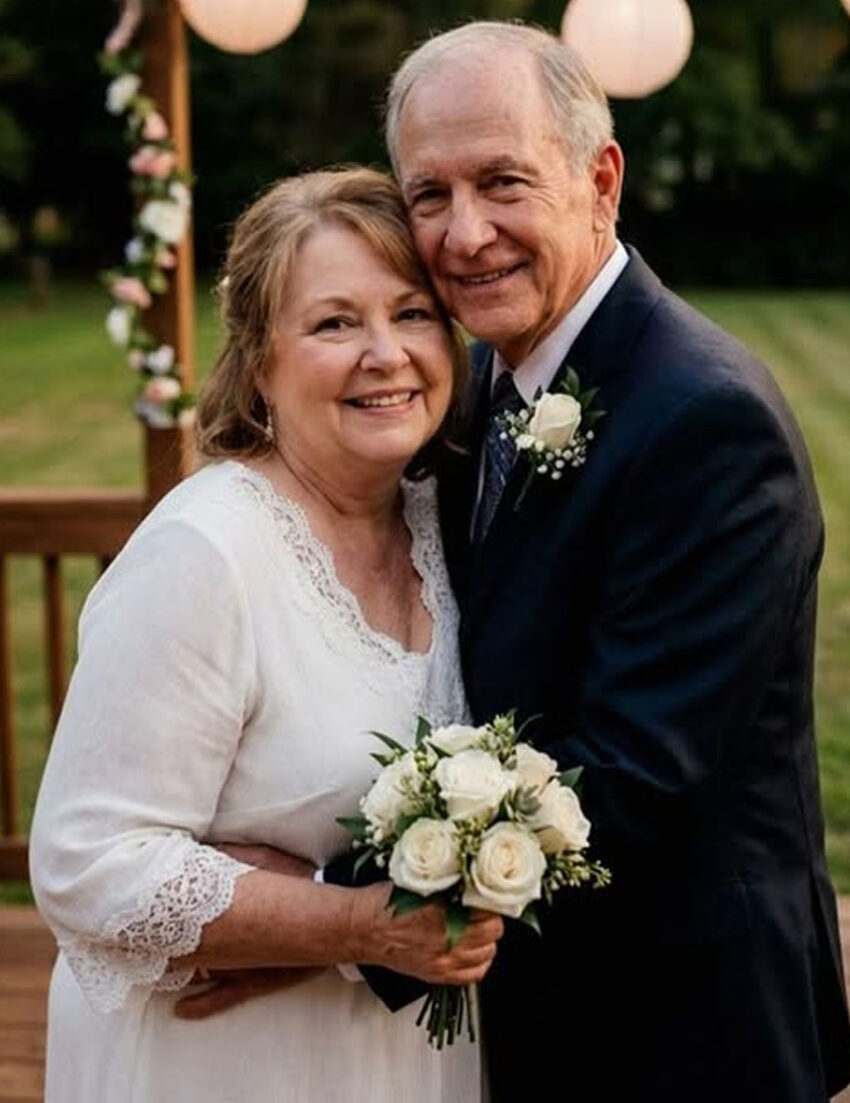
I didn’t think I would ever fall in love again after Paul died. We had been married thirty-seven years, and when he was gone, the house turned into a museum of everything we used to be. I kept his sweater folded on the same chair. I left his favorite mug in the front of the cabinet like he might reach for it any day. Grief made time feel heavy and repetitive, and for five years I lived alone more out of habit than choice.
Then one morning, I spilled coffee on myself and met the man who pulled me back into the world.
It happened in a small corner café near the bookstore I loved. I was flipping through a gardening magazine when a hot splash hit my blouse. I jumped, embarrassed and startled, and heard a frantic voice immediately.
“Oh no, I am so sorry!”
I looked up to see a tall man with silver hair and kind eyes, fumbling with napkins, trying to blot coffee like he could erase the moment by sheer determination. His hands shook with sincerity, not nerves.
“No harm done,” I said, and surprised myself by smiling.
He insisted on buying me another drink. That turned into sharing a table while my blouse dried under the café’s hand dryer in the bathroom. Then it turned into conversation that felt easy, the way it used to feel with Paul before life became complicated.
His name was Robert. He had lost his wife years ago, early in their marriage, and he had raised their daughter alone. Laura was thirty-six now. He spoke about her with pride and a quiet sadness, like a man who had done his best and still carried guilt for what he couldn’t give.
That accidental meeting turned into lunch the next week, then dinner. We laughed like old friends and talked like people who hadn’t been seen clearly in years. I didn’t need Robert to rescue me. I didn’t want that. What I wanted was to feel alive again without apologizing for it.
Within a year, Robert proposed. I said yes—not because I needed a husband again, but because I wanted to choose love while I still could.
For the first time since Paul’s death, I felt awake.
Laura did not share that joy.
From the beginning, she made her disapproval obvious. It wasn’t subtle. It wasn’t complicated. It was sharp, dismissive, and consistent. I tried to meet her halfway. I invited her to lunch. I called to check in. I suggested coffee, just the two of us. Each time she dodged, deflected, or responded with a polite excuse that meant no.
Finally, I stopped pretending this was a misunderstanding and asked her directly why she was so against the wedding.
She didn’t hesitate. “You’re too old to get married,” she said. “Who even does that? And don’t act like we don’t all know why you’re doing it. The house. The money. My inheritance.”
Robert was seventy. I was sixty-eight. Old enough to know what grief does to people, and old enough to know what love can still do if you let it.
“I have my own home,” I told her calmly. “I have my own money. I’ve already lived one great love. This isn’t about taking anything. It’s about choosing again.”
She flinched like I’d hit something tender. That was when I understood her anger wasn’t really about me. It was about fear. But fear doesn’t give someone permission to be cruel.
Not long after that, Robert quietly gave me access to his accounts so I could handle wedding deposits and vendor payments. He said it casually, like it was a normal act of trust between people building a life together.
That’s when I started noticing small things that didn’t fit.
Letters from the bank Robert didn’t remember receiving. Payments he seemed confused about. Odd transfers that didn’t match his spending habits. And Laura, making comments in front of him that sounded harmless but carried a strange confidence.
“Dad doesn’t need to worry about paperwork anymore,” she’d say, too quickly, too smugly.
It wasn’t dramatic enough to accuse her of anything. But it was enough to make me pay attention. I started documenting what I found. Dates. Amounts. Copies of notices. Not because I wanted a fight, but because I didn’t want to be blindsided.
Then the wedding day arrived.
The sky was crisp and blue, the kind of day that makes you believe in new beginnings. I arrived at the venue early, nerves fluttering in my chest, but hopeful. I was walking toward the dressing room when I saw Laura leaving the hallway. She didn’t notice me. She was smiling—small, satisfied, like she had already won something.
I waited until she disappeared around the corner, then I turned back and opened the dressing room door.
My stomach dropped.
My wedding dress was ruined. The zipper had been yanked off. The lace bodice was torn. A brown stain—coffee, I was almost sure—was smeared across the skirt like someone had deliberately tried to make it ugly.
I stood there for a few seconds, breathing carefully, forcing myself not to panic. Then I did the one thing I knew would matter later.
I took photos. Every angle. Every tear. Every stain.
No he-said, she-said. Just proof.
A moment later, Laura strolled in like she belonged there, sipping water, wearing that same smug expression.
“This wasn’t just a dress,” I said quietly. “It was a choice. And you tried to take it away.”
She didn’t flinch. “Maybe it’s a sign,” she said. “Maybe you should cancel the wedding.”
I stared at her, and something settled inside me—cold and steady. I wasn’t broken. I wasn’t even surprised. I was done letting her control the story.
I called my friend Deirdre and told her to find me a white dress, any dress, as fast as humanly possible.
Thirty minutes later she returned with a simple ivory sheath dress. It wasn’t the gown I’d chosen. It didn’t have the lace or the train. But when I put it on, I looked in the mirror and felt something unexpected.
Stronger.
Like the dress wasn’t a compromise, but armor.
When I walked down the aisle, Robert’s face flickered with confusion at the change, but when I reached him, he smiled anyway. His eyes held mine with the same warmth they always had. Whatever else happened today, I knew one thing: I wasn’t going to let sabotage steal my joy.
After the ceremony, I took Robert aside and showed him the photos.
His hands trembled as he scrolled through them. “Why would she do this?” he whispered, genuinely stunned.
“Because she thought I’d stay quiet,” I said. “She thought you’d choose silence. Or her. I just needed you to know the truth.”
He didn’t say much then, but I watched something shift in him, a painful awakening.
At the reception, Robert tapped his glass. The room quieted.
“Laura,” he said, voice steady, “you destroyed Margot’s wedding dress. I want everyone here to know it. My wife could have hidden that. She didn’t. She stood up.”
A collective gasp rippled through the room.
Laura’s face tightened. She looked ready to lash out, but before she could speak, I stepped beside Robert.
“I didn’t come into Robert’s life to replace anyone,” I said, keeping my voice calm. “We both lost people we loved. This love found us anyway. We chose to honor it. I’m not here to take. I’m here to build. And if you want to be part of this family, it starts with honesty, not sabotage.”
Laura’s jaw worked like she was chewing rage. She opened her mouth, then closed it again.
And that was when I pushed where it hurt—not to humiliate her, but to force the truth into daylight.
“I’ve also noticed your father hasn’t signed his own documents in years,” I said. “When did that start? And why are you so comfortable moving money that isn’t yours?”
The room went silent in a way that felt like air being pulled out.
Laura snapped. “You think you’re so clever?” she shouted. “I’ve been managing his finances for years! Signing things for him—because he trusts me! Because he doesn’t see things clearly anymore! And you come in here acting like some queen who can fix everything?”
Robert went pale. “What do you mean, signing things?” he asked, voice low.
She backpedaled, but it was too late. “I was helping,” she insisted. “Bank stuff. Taxes. Investments. You never cared about those things!”
“You told me you were organizing paperwork,” Robert said, quiet and devastated.
Laura looked around, realized no one was going to rescue her, and stormed out.
Nobody followed.
That night, back at Robert’s house, we logged into everything. It didn’t take long to see it clearly: missing funds, questionable transfers, payments that didn’t make sense. Laura hadn’t just been angry about the wedding. She’d been afraid I would notice what she’d been doing.
Robert sat back, staring at the screen like it was a language he suddenly understood too late. “I trusted her,” he said.
“You still can,” I told him. “But with your eyes open.”
We lay in bed afterward, holding hands, not talking much. I knew the next weeks would be hard. There would be fallout. There would be conversations that hurt.
But the foundation had changed.
Truth. Boundaries. Self-respect.
And the simple, stubborn fact that at our age, love isn’t something you beg for.
It’s something you choose.