


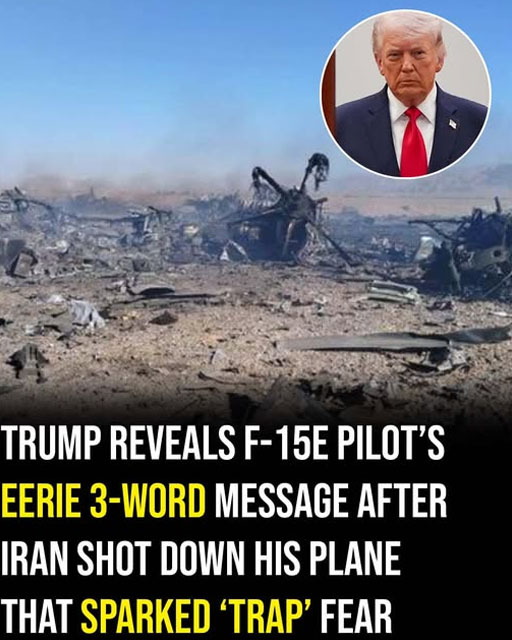
The first message sounded wrong.
Alone in the mountains of Iran, a wounded American pilot whispered four strange words into the radio – and for a moment, the White House froze. Had the United States just been lured into the perfect ambush? As generals argued and surveillance screens flickered, one chilling phrase made everyone question wheth
When the F-15 went down over Iran, the mission shifted in an instant from airpower to survival. One co-pilot was quickly recovered, but the other vanished into hostile mountains as Iranian forces and civilians were reportedly offered rewards to hunt him down. Hidden in a rocky crevice with only a handgun, he finally broke radio silence with a phrase that sounded, to those listening in Washington, like a devout Muslim’s prayer. That brief transmission sparked a terrifying possibility: what if Iran was spoofing the signal, baiting US forces into a deadly rescue trap?
While intelligence teams dissected every “beep” of tracking data, others reminded Trump the missing colonel was himself deeply religious. In the end, technology, persistence, and a razor-thin margin of time led US special operators to the real man, not a decoy. Pulled out alive and flown to Kuwait, his survival became less a story about politics than about fear, faith, and the split-second doubts that haunt every life-or-death decision in war.