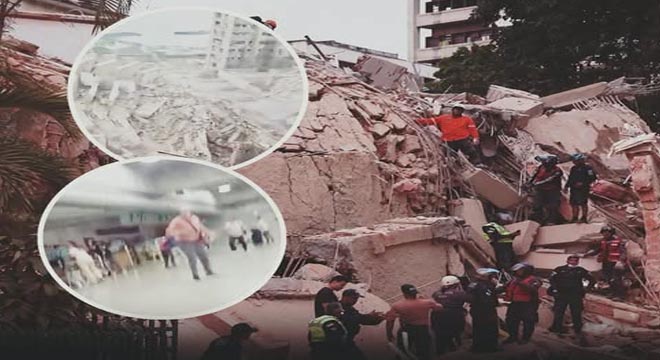
Venezuela’s northern coastline has experienced a major seismic disaster following a sequence of two powerful earthquakes that struck within seconds of each other. The tremors, measuring 7.2 and 7.5 in magnitude according to geological monitoring agencies, were felt across large parts of the country, including the capital city Caracas and surrounding coastal regions.
The sudden back-to-back nature of the earthquakes intensified the impact, leaving residents little time to react or evacuate to safety.
Early reports indicate that the event represents one of the most significant seismic incidents to affect the region in decades. The epicenter of the earthquakes was reported to be located offshore near the Caribbean coastline, in proximity to the state of La Guaira and west of the coastal community of Morón. This area is known for its dense population, infrastructure networks, and proximity to key national transport hubs.
Because of its geographic position, the seismic waves were felt strongly in both coastal settlements and inland urban centers. Authorities have stated that aftershocks continued to be recorded following the initial main shocks, adding further concern for structural stability in already damaged areas.
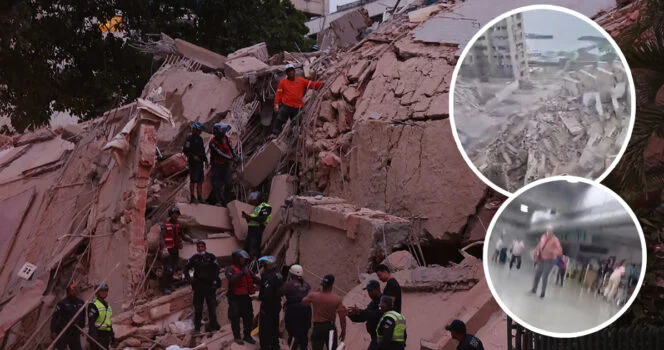
Emergency response teams were immediately deployed across affected zones as buildings, roads, and essential infrastructure sustained varying degrees of damage. Local authorities reported that dozens of structures collapsed or suffered partial structural failure, particularly in older residential and commercial buildings that were not designed to withstand high-magnitude earthquakes. In several locations, emergency crews were forced to conduct rescue operations manually due to blocked roads and debris, slowing access to heavily impacted neighborhoods.
The Simón Bolívar International Airport in La Guaira was among the critical facilities affected by the earthquake. Operations were temporarily suspended after reports of structural damage to parts of the terminal and surrounding infrastructure. Aviation authorities prioritized safety inspections and evacuated passengers and staff as precautionary measures. The closure of the airport has complicated logistical efforts for international aid and emergency response coordination, although alternative entry points are being assessed.

In the immediate aftermath of the disaster, Venezuelan authorities declared emergency conditions in the most affected regions. Rescue operations were launched with the primary objective of locating and extracting survivors trapped under collapsed buildings. Emergency shelters were established in schools, sports centers, and public buildings to accommodate displaced families. Many residents were forced to leave their homes with minimal belongings due to ongoing concerns about structural instability and the risk of further collapse.
Health services in affected areas have been placed under extreme pressure as hospitals and clinics treat injured residents. Medical teams have been working continuously to provide emergency care, often under challenging conditions due to power outages and limited supplies. Authorities have reported a significant number of injuries, though exact figures continue to change as rescue operations progress and additional areas become accessible. Officials have emphasized that casualty numbers are still being verified and are expected to evolve in the coming days.

International response efforts have begun to mobilize as several countries expressed readiness to assist Venezuela in dealing with the aftermath of the earthquakes. Search and rescue teams, along with medical and humanitarian aid units, have been prepared for deployment to support local authorities. Coordination between international agencies and Venezuelan emergency services is ongoing, with priority placed on urban search-and-rescue operations in densely affected zones. The arrival of foreign assistance is expected to strengthen ongoing rescue and recovery efforts.
Health services in affected areas have been placed under extreme pressure as hospitals and clinics treat injured residents. Medical teams have been working continuously to provide emergency care, often under challenging conditions due to power outages and limited supplies. Authorities have reported a significant number of injuries, though exact figures continue to change as rescue operations progress and additional areas become accessible. Officials have emphasized that casualty numbers are still being verified and are expected to evolve in the coming days.
International response efforts have begun to mobilize as several countries expressed readiness to assist Venezuela in dealing with the aftermath of the earthquakes. Search and rescue teams, along with medical and humanitarian aid units, have been prepared for deployment to support local authorities. Coordination between international agencies and Venezuelan emergency services is ongoing, with priority placed on urban search-and-rescue operations in densely affected zones. The arrival of foreign assistance is expected to strengthen ongoing rescue and recovery efforts.
Government officials have stated that restoring essential services such as electricity, clean water, and communications is a top priority alongside rescue operations. In many areas, infrastructure damage has disrupted access to basic utilities, leaving thousands of residents without reliable power or water supply. Engineers and technical teams have been dispatched to assess damage and begin preliminary restoration work, although full recovery is expected to take considerable time depending on the extent of structural impact.
Reports from local media and eyewitness accounts describe scenes of panic immediately following the earthquakes, with residents rushing into streets as buildings shook violently. In urban centers, alarms were triggered, and emergency protocols were activated in residential and commercial complexes. Social media footage shows widespread dust clouds, damaged facades, and people gathering in open areas while waiting for further instructions from authorities. These accounts highlight the sudden and intense nature of the seismic event.
Authorities have also warned of the possibility of aftershocks continuing in the region, urging residents to remain cautious and avoid entering structurally compromised buildings. Engineers are currently assessing the safety of key infrastructure, including bridges, hospitals, schools, and transport networks. Structural evaluations are expected to determine whether certain buildings can be repaired or will require demolition due to severe damage.
While early assessments suggest significant destruction, officials have repeatedly emphasized that full damage evaluations are still ongoing. At this stage, it is not possible to provide a final confirmed death toll or total economic loss. Emergency management agencies have stated that information is being updated continuously as rescue teams reach previously inaccessible areas and as communication systems are gradually restored.
The Venezuelan government has appealed for national unity and international support as recovery efforts continue. Leadership officials have stressed that the immediate focus remains on saving lives, providing shelter for displaced families, and ensuring medical care for the injured. Humanitarian organizations are also coordinating efforts to deliver food, water, and essential supplies to affected communities, particularly in coastal zones where damage appears to be most severe.
As the situation develops, global attention remains focused on Venezuela’s response to the disaster and the resilience of affected communities. The coming days are expected to be critical in determining the full scale of the impact, as rescue operations continue and more information becomes available from local and international agencies involved in the emergency response.